
Justin
Walton
Thirty years of building real things and financing them — now building the company that lets everyone else do the same.
Who he is
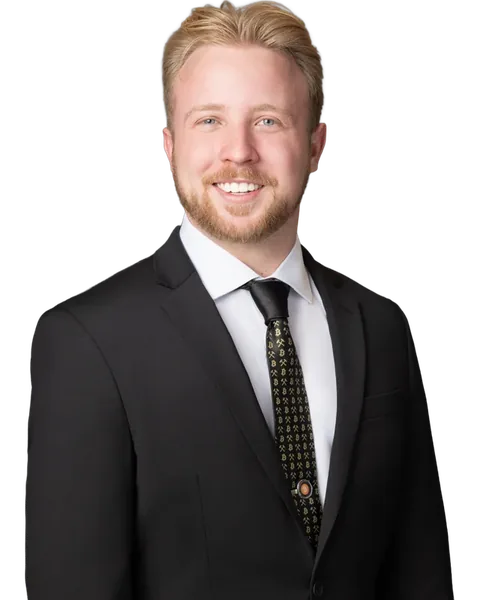
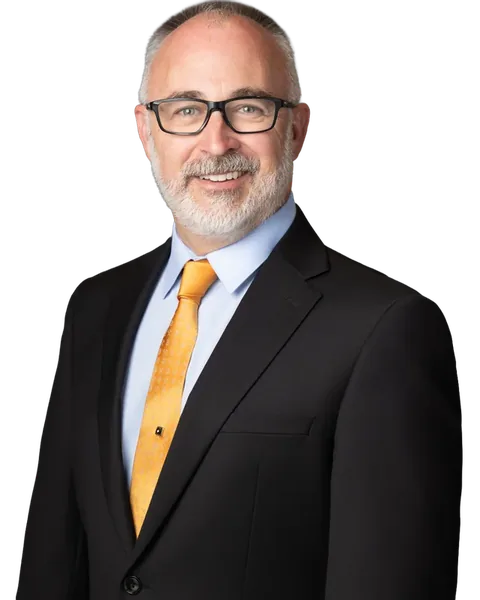
Justin Walton is an entrepreneur, business executive and the Chief Executive Officer of Yieldz Holdings, Inc., where he leads corporate strategy, business development, capital formation and the company's expansion across the private capital markets and financial services. He is the architect of the Yieldz model — the idea that a real-world asset should be tokenized only when something real stands beneath it — and the person who assembled the bankers, capital-markets professionals, insurance executives and engineers who are building it.
He is a fourth-generation homebuilder and real estate developer. His father, grandfather and great-grandfather were builders, and he grew up in the business — working as a laborer, a framer and a skilled craftsman before he was an architectural designer, then selling and building homes through college with the family company, Diamond Custom Homes, on Lake Conroe. He earned his real estate license a week after graduating high school and a B.S. in Marketing from Sam Houston State University while wearing every hat the business had: sales, design, construction superintendent.
Thirty years of operating
Walton's corporate career was spent inside one of the largest production homebuilding operations in the country. At Emerald Homes, a division of D.R. Horton in Houston producing roughly 1,000 homes a year, he rose from Construction Manager — setting record production rankings — to Estimating and Architectural Manager, and then to Vice President of Purchasing, Architecture, Estimating and Design Center, managing a staff of twenty. He implemented the Continental line of homes for the Houston division to capture the entry-level housing boom that began in 2002, and negotiated some of the largest rebate savings of any division in the company, roughly $4,200 per unit. He went on to serve as Division President of Design Tech Homes in San Antonio, a full-service design-build custom builder producing 85 homes a year, responsible for the entire operation.
Then he built his own companies. He founded This New House to take raw land through entitlement to finished high-density townhomes and single-family homes in Houston, working directly with land planners, engineers, and city and county agencies. He founded and grew HG Walton Homes — later Black Oak Homes — into a 25-to-35-unit-a-year land development and custom home builder doing roughly $15 million in annual sales at its peak, and sold it to former colleagues from Emerald Homes: first-hand experience building an operating business through growth to a completed transaction. He founded JL Classic Homes, LJR Properties (a 24-unit build-to-rent duplex community), Black Oak Industries (commercial office condominiums on FM 1488 in Magnolia), Buildology (the marketing and digital-advertising arm that has supported every venture since), JL2E Investments, and The Mods Student Housing in the Bryan–College Station market. Across those companies he has taken projects from raw land to entitlement to completion, managed operations building homes from $150,000 to $1.5 million, and run businesses through recessions, booms and a pandemic.
The builder's instinct, applied to finance
Walton's passion for building and optimizing computers led him to construct his first Bitcoin mining rig in 2011–2012. That interest in extracting maximum performance from hardware became a company — Yieldz Consulting, then Yieldz, Inc. — that integrated mining operations under one platform and shipped its own wallet. It also taught him something a developer already knew from the other direction: capital is the constraint on every good project, and the market for private capital has none of the infrastructure — the listings, the comparables, the title company — that makes the real estate market work.
Yieldz Holdings is his answer. Under his leadership the company has developed an integrated set of services and technology around business valuation, capital-readiness planning, private securities offerings, digital securities and asset tokenization, investor data-room preparation and strategic capital advisory. It works alongside broker-dealers, securities attorneys, insurance professionals, valuation firms, financial institutions and technology providers to create compliant pathways for companies pursuing private capital — always with regulated activities conducted by appropriately licensed professionals within the proper regulatory framework.
The single most consequential decision in the model is his: every asset tokenized on Yieldz carries cash-value life insurance on its principals sized to cover or exceed its valuation. A builder knows what a lender needs to see before it funds a project. Sophisticated capital checks structure first — and improper structure, no key-man coverage, no buy/sell agreement, is the deal-killer past the elevator pitch. Walton made that structure the entry key to the platform, and in doing so gave investors continuity, gave founders the structure they were missing, and gave a bank an instrument it has understood for a hundred years.
From a platform to the Bank of Tomorrow — coming soon
A significant focus of Walton's work is the intersection of traditional finance and emerging financial technology: bank ownership and partnerships, institutional banking relationships, private securities markets, digital-asset infrastructure, tokenization of real-world assets and the development of a bank-supported dollar stablecoin. He has led Yieldz Holdings from evaluating a stake in an existing institution to the decision to charter a de novo, branchless bank — a traditional charter that takes deposits and lends normally, with cash-collateralized premium-finance lending on the policies beneath every Yieldz tokenization as its distinguishing line of business — and to stand a broker-dealer and alternative trading system beside it.
The destination is a single, self-custodied financial system in which a person's cash, stablecoins, digital commodities, public and private digital securities, tokenized memberships and their own tokenized life insurance policy live in one place — with a chartered bank and a licensed insurer standing behind it. Americans say they trust traditional finance, and banks first, with tokenized assets. Walton is building the platform that occupies exactly that position.
What he owns at Yieldz
Walton sets the strategy and designs the products. The Yieldz VC accelerator that invests in founders first, the Capital Raise Blueprint and the Capital Concierge role, the tokenized Yieldz Club memberships, the Yieldz Capital Summit at the U.S. Formula 1 weekend, the nationally marketed Texas membership program, the Yall'aco entertainment-district proposal to Circuit of the Americas, the Poly DZ joint-venture structure for the bank and stablecoin — each began as his architecture. He personally leads relationships with banks and carriers, broker-dealers, ultra-high-net-worth investors, racing partners and COTA, and he serves as developer of record through JL2E Investments on the Elsinore Ring private-track and residential development in Lake Elsinore, California — a $75 million-infrastructure project engineered by Tilke that is positioned to become one of the largest real-world assets ever tokenized. He is a licensed insurance professional with existing carrier contracts, and he remains a working real estate developer.
Throughout his career he has done one thing in different forms: build operating businesses, identify the financial opportunity inside them, assemble the executive and professional teams to execute, and connect companies with the capital, institutions and strategic partners they need. Yieldz Holdings is that same discipline at the scale of a financial system.